Ground Stabilisation for Structural Foundation Improvements
When soft alluvium soils threatened to force costly piling, M&T turned to Envirobase Technologies. A tailored stabilisation blend and rigorous QA transformed the ground, enabling strip footings, cutting costs, and delivering a compliant, build-ready foundation.
Project Details
TL;DR:
Envirobase Technologies delivered a bespoke ground stabilisation solution for M&T, transforming weak alluvium soils into a stable foundation layer, enabling strip footings and avoiding costly piling.
Designed a custom stabilisation blend to improve soil strength and reduce settlement.
Applied controlled mixing techniques with rigorous QA and geotechnical testing.
Achieved substantial cost and time savings while meeting all structural and environmental standards.
Contact Envirobase Technologies to find cost-effective alternatives to piling for challenging ground conditions.
M&T – Ground Stabilisation for Structural Foundation Improvements
Permenant works – Highways
Client: M&T Sector: Commercial Building Development
Challenge:
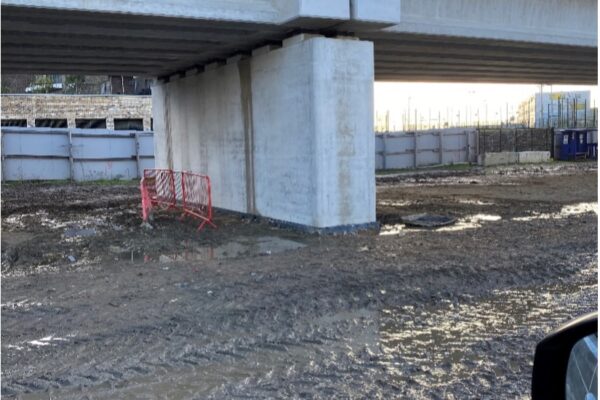
Enhancing the load-bearing capacity of soft alluvium soils to support traditional strip footings, avoiding the need for a more expensive piled foundation system.
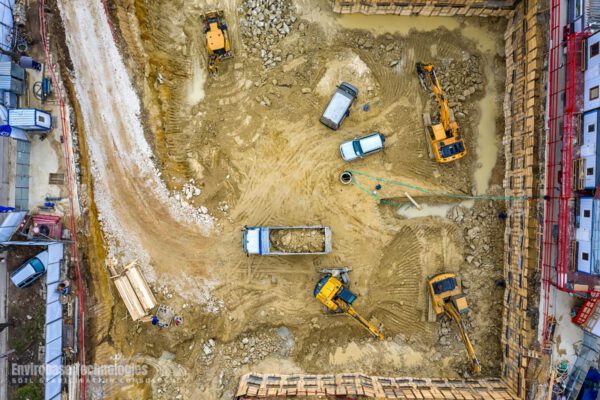
M&T approached our team with a critical geotechnical challenge: the proposed development site was underlain by soft alluvium soils with insufficient strength and excessive settlement potential. The original design called for piled foundations, but the client sought a more cost-effective alternative—traditional strip footings—if the ground conditions could be suitably improved.
Solution:
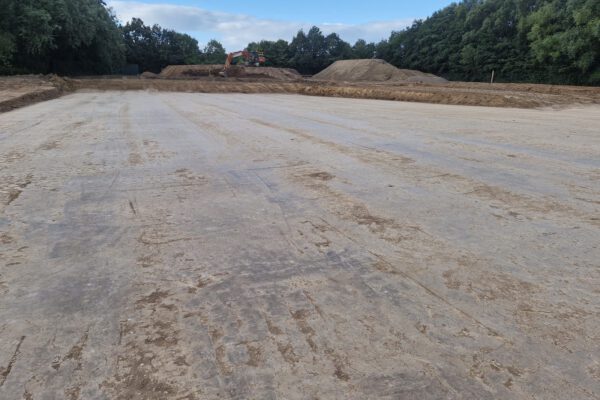
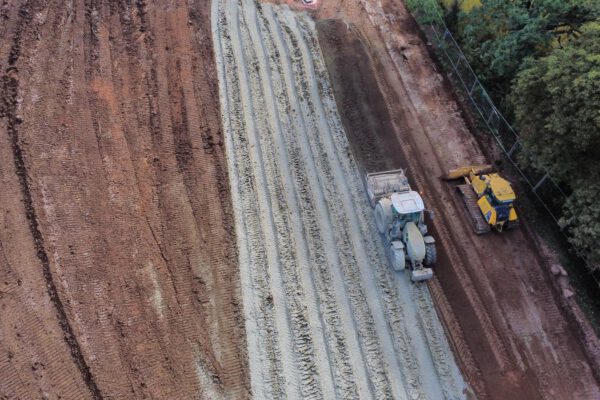
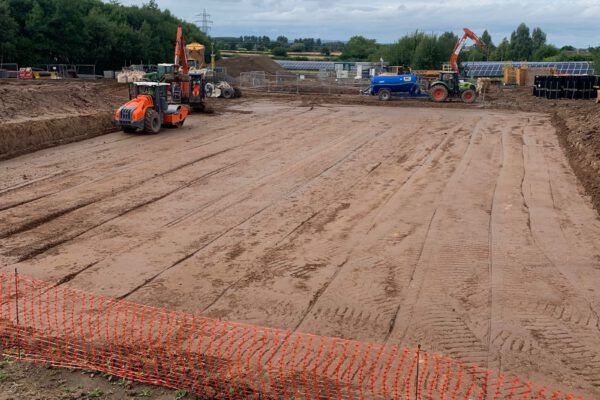
We developed a fully warranted bespoke ground improvement strategy focused on creating a structural layer capable of supporting the building loads. This involved a tailored soil stabilisation process using a custom-designed powder blend formulated to enhance strength and reduce compressibility.
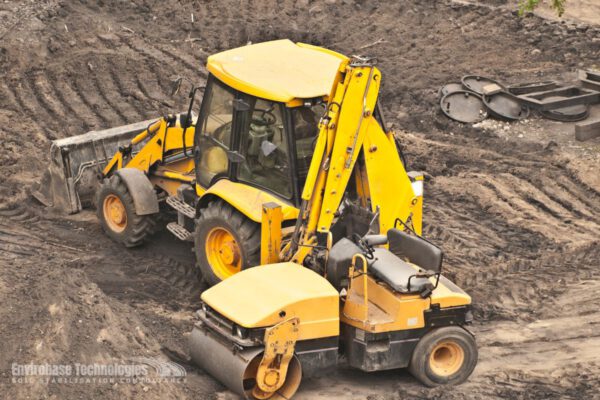
The stabilisation process was executed through controlled soil mixing techniques, ensuring uniform distribution of the powder and consistent treatment depth. A rigorous testing regime was implemented, including:
Strength assessments to confirm bearing capacity
Settlement analysis to ensure long-term stability
Quality assurance protocols to verify compliance at every stage
The powder formulation was engineered to react with the site’s specific soil chemistry, producing a hardened matrix with significantly improved geotechnical properties.
Outcome:
The treated soil layer met all technical requirements, enabling the use of strip footings and eliminating the need for piling. Strength and settlement parameters were validated through post-treatment testing, and the construction process adhered to strict quality assurance standards.
M&T benefited from substantial cost savings and reduced construction time, while maintaining full compliance with structural and environmental regulations. The success of this project highlights the effectiveness of bespoke soil stabilisation in transforming marginal ground into buildable terrain.
For Curo’s high-profile film studio project, Envirobase provided independent validation of self-delivered stabilisation works. Through oversight, testing, and stakeholder collaboration, we ensured full compliance and delivered a robust final validation report.
F1 Construction successfully maximised the reuse of existing site soils by stabilising them to meet Local Highways Authority requirements for Section 278 works. This approach achieved a zero cut/fill balance, reducing environmental impact and material costs while ensuring full compliance with highway standards.
EBT designed and delivered a stabilised piling and crane platform using site-won materials, meeting BR 470 & BR 475 standards. The solution reduced material imports, cut costs, and ensured safe, uninterrupted heavy plant operations.
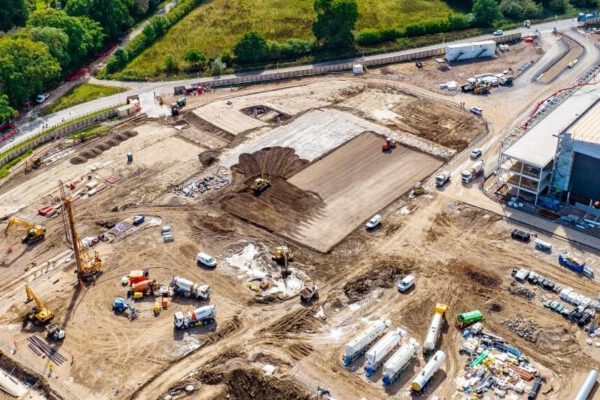
Design and construction of circa 8000m2 of haul road and 14000m2 of pile platform was in our scope of works to provide easily maintained and suitably tested access for all heavy plant such as piling rigs, 300T crawler cranes and PC Y beam delivery vehicle weighing circa 80T.
This website uses cookies to improve your experience. If you continue to use this site, you agree with it.